Atoosa
Social novels hold great importance in understanding different societies. These novels have a significant impact on readers and influence their behavior within specific times and places. In Iran, during the 1940s and 1950s (1320s and 1330s in the Persian calendar), many novels with social themes emerged. Many of these works are also rooted in a sense of nostalgia, through which the author attempts to explore them within a particular semantic framework.
Of course, there are also numerous social and critical novels whose impact on the minds and thoughts of readers can be considerable. The novel Atousa is a social novel, and its author, Mr. Mohammad Faqihi, has sought to compose it with his eloquent and refined style.
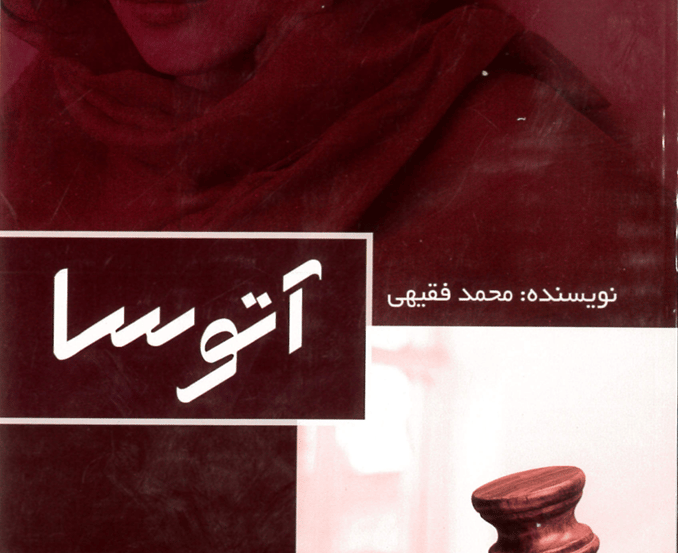
Mohammad Faqihi is a graduate of mathematics from Shiraz University. He has written several novels so far, including The Story of Hamideh, Shalini, Siavash & Parva, and Golnar. He is also engaged in poetry and has a strong interest in reading, having studied numerous books on history, novels, and other subjects.
In addition, he is active in social and cultural matters and supports charitable activities. His attention to books and reading stems from a scientific and knowledge-oriented mindset developed during his childhood. The novels he has authored reflect a positive outlook and demonstrate his optimistic perspective on social issues.


Social concerns and themes related to humanity’s transition from war and conflict toward peace, tranquility, and humanism are also present in most of his novels. A spirit of tolerance and moderation runs throughout much of his writing, reflecting a call for a more positive outlook within human societies.
Social novels can attract their own audiences across different periods, and even in contemporary societies—despite the wide range of concerns people face—readers often show greater interest in novels, particularly historical and social ones, compared to other scientific and cultural works.
Historically, in Iran as well, reading historical and social novels has held significant importance, and such works have consistently occupied a prominent place on the shelves of personal and family libraries. Overall, social novels express an author’s perspective and way of thinking about the social issues of their own society as well as those of humanity at larg


© 2026. All rights reserved for mywritingright