Specifications of The Springs of Ceylon
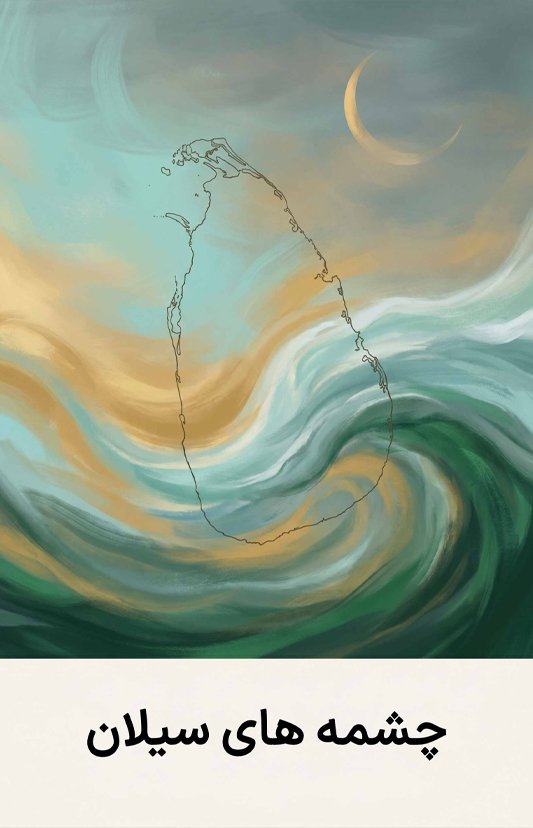
* Book Title: “The Springs of Ceylon: Muslim Participation in Sri Lanka”
* Translator: Mohammad Faghihi
* Scientific Editor: Dr. Mohammad Hossein Nia
* Literary Editor: Morteza Ensaf-Manesh
* Cover Design: Sina Khaledi
* Publisher: Jonoub
* Printing and Binding: Nasim
* Edition: First – 1404
About The Springs of Ceylon
The Springs of Ceylon by Asif Hussain is a study of the role of Muslims in the history, economy, politics, and society of Sri Lanka. Based on the table of contents and the early sections of the book, the author aims to show that Muslims are not merely a religious minority. Instead, they have played a significant role in shaping the country’s identity and development.
Arrival of Muslims in Sri Lanka
The The Springs of Ceylon explains that Muslims first arrived in Sri Lanka around the early centuries of Islam. Most of them came as Arab traders through the Indian Ocean maritime routes. Over time, many settled on the island. They married local people and became part of Sri Lankan society. However, they also preserved their Islamic identity.
Coexistence with Other Ethnic Groups
A key theme in The Springs of Ceylon is peaceful coexistence. Muslims have lived alongside the Sinhalese and Tamil communities for centuries. Unlike many regions in the world, relations between these groups have often been relatively peaceful.
Moreover, the book highlights examples of inter-ethnic marriage, social cooperation, and mutual trust. As a result, Muslims are presented as an integral part of Sri Lanka’s social fabric.
Economic Contribution of Muslims
The book emphasizes the strong economic role of Muslims in Sri Lanka. Because of their long tradition in trade, they became an important driving force in the economy. Maritime commerce, import and export activities, and the creation of trade links between Sri Lanka, Asia, and the Middle East are described as major contributions.
Political and National Role
The Springs of Ceylon also discusses the political participation of Muslims. During Sri Lanka’s independence movement and in the post-independence era, Muslims played an active role in national politics.
In addition, many Muslim leaders supported national unity and encouraged cooperation among different ethnic groups. Therefore, their role is presented as both political and unifying.
Muslims During the Civil War
The book also addresses the long civil war in Sri Lanka between the government and the Tamil Tigers. Muslims were affected by this conflict as well. However, they also attempted to act as mediators and contributors to stability.
Furthermore, the author explains that despite suffering during the war, Muslim communities continued to seek peace and coexistence within the country.

Reviews
There are no reviews yet.